The Challenge: A Maintenance Crisis at the Ground Level
Like many local authorities in 2026, East Riding of Yorkshire Council (ERYC) manages a vast infrastructure network under the dual pressure of a budget squeeze and a climate emergency. With 40,000 lamp posts to maintain, the council faced a persistent, "hidden" enemy: corrosion.
Traditional factors like road salt, water ingress, and—most notably—dog urine were slashing the life expectancy of these assets from a projected 50 years down to just 15.
The Financial Reality:
15% of the asset base (6,000 posts) required intensive corrosion treatment every year.
At an average cost of £175.00 per post, the council was looking at a recurring annual liability of £1,050,000.00.
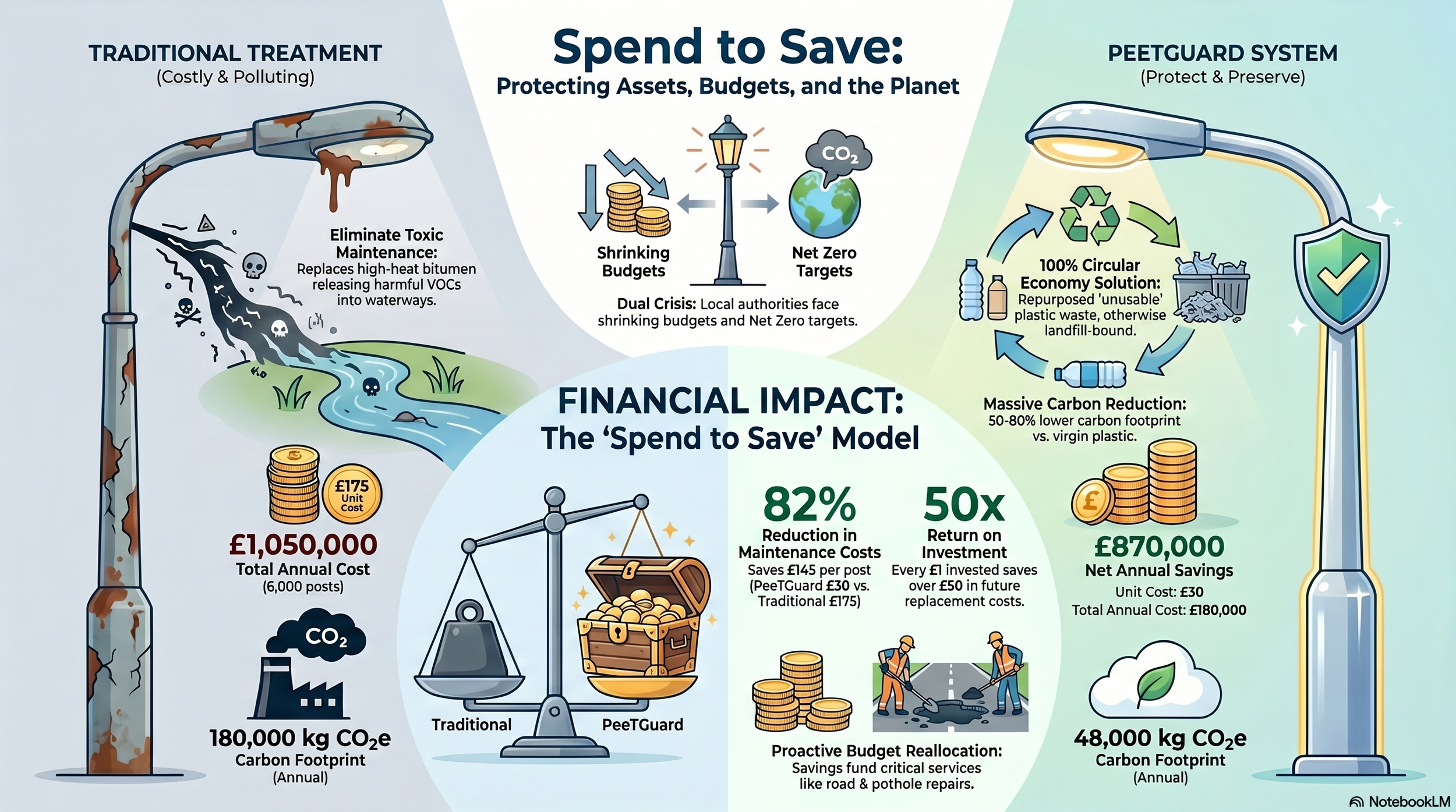
Streetlight Maintenance Cost-Benefit Comparison
The Solution: PeeTGuard (The "Spend to Save" Strategy)
ERYC moved away from the traditional "React & Replace" model—where repairs are only made once damage is visible—to a "Protect & Preserve" strategy.
The centerpiece of this shift was the PeeTGuard system: a discreet, high-durability protective collar designed to redirect corrosive elements away from the base of the post.
Why PeeTGuard?
Sustainability: Made from 100% repurposed plastic "dregs" that are typically unsuitable for other recycling streams.
Simplicity: A two-part interlocking design that requires no tools and zero specialized labor for installation.
Durability: Unlike bitumen, PeeTGuard does not shrink, crack, or degrade under UV exposure.
The Results: By The Numbers
The shift from reactive bitumen treatment to proactive PeeTGuard installation transformed the council’s balance sheet and carbon ledger.
Annual Cost Comparison
Maintenance Strategy. Unit Cost Total Cost (6,000 Posts).
Traditional Treatment. £175.00. £1,050,000.00
PeeTGuard Implementation. £30.00. £180,000.00
Net Savings £145.00/post. £870,000.00
The Carbon Win
Beyond the financial savings, the environmental impact was immediate. Traditional bitumen repairs require heating materials to 180°C, releasing significant VOCs and CO2. By switching to a circular-economy product, ERYC achieved:
Total CO2e Savings:132,000kgs per year.
Impact: A reduction in carbon footprint by 50–80% compared to using virgin plastics or traditional materials.
The Broader Impact: Potholes and Public Services
The £870,000 saved isn't just a number on a spreadsheet—it represents "found money" for the council. These funds can be reallocated to urgent public needs, such as the UK’s growing pothole crisis or local social services.
By investing £30 today to protect a post, the council can prevent a £1,300 replacement bill tomorrow.
