The Challenge: The Hidden Cost of Infrastructure Maintenance
For local authorities like Warrington Borough Council, maintaining 28,000 lamp posts is a massive logistical and financial undertaking. Traditional corrosion treatment methods—often relying on bitumen-based products—are not only expensive but environmentally taxing.
Warrington found that treating just 15% of their columns annually (4,200 posts) for corrosion was costing an average of £735,000 per year.
The Solution: The PeeTGuard Shift By transitioning to the PeeTGuard system, a circular-economy solution made from unrecyclable materials, the council can completely redefine its maintenance ROI. Instead of high-maintenance bitumen, the council can use a recycled plastic collar designed to prevent corrosion at the source.
The Results: Massive Savings and Drastic Carbon Reductions
1. Financial Impact: £609,000 Saved Annually
The most immediate impact is on the council's bottom line.
Traditional Cost: £175.00 per unit
PeeTGuard Cost: £30.00 per unit
Total Annual Saving: £609,000.00
By reducing the cost per unit by over 80%, Warrington is able to reallocate over half a million pounds every year to other vital public services.
2. Environmental Impact: Cutting 92,400kg of CO2e
Moving away from bitumen isn’t just about the money; it’s about the planet. Bitumen is a crude oil derivative that requires high-energy processing and emits harmful VOCs and Nox during application.
In contrast, PeeTGuard is:
Carbon Efficient: Saves 92,400kg of CO2e annually across the maintenance program.
Truly Circular: Made from unrecyclable plastic, reducing carbon footprints by 50-80% compared to virgin plastic.
Durable: Unlike bitumen, it doesn't degrade, shrink, or leak pollutants into waterways over time.
A Blueprint for the Future Warrington Borough Council’s success with PeeTGuard proves that "going green" doesn't have to be expensive. In fact, it’s the most fiscally responsible path forward. By choosing circular economy materials over fossil-fuel-dependent methods, councils can protect their assets, their budgets, and the environment simultaneously.
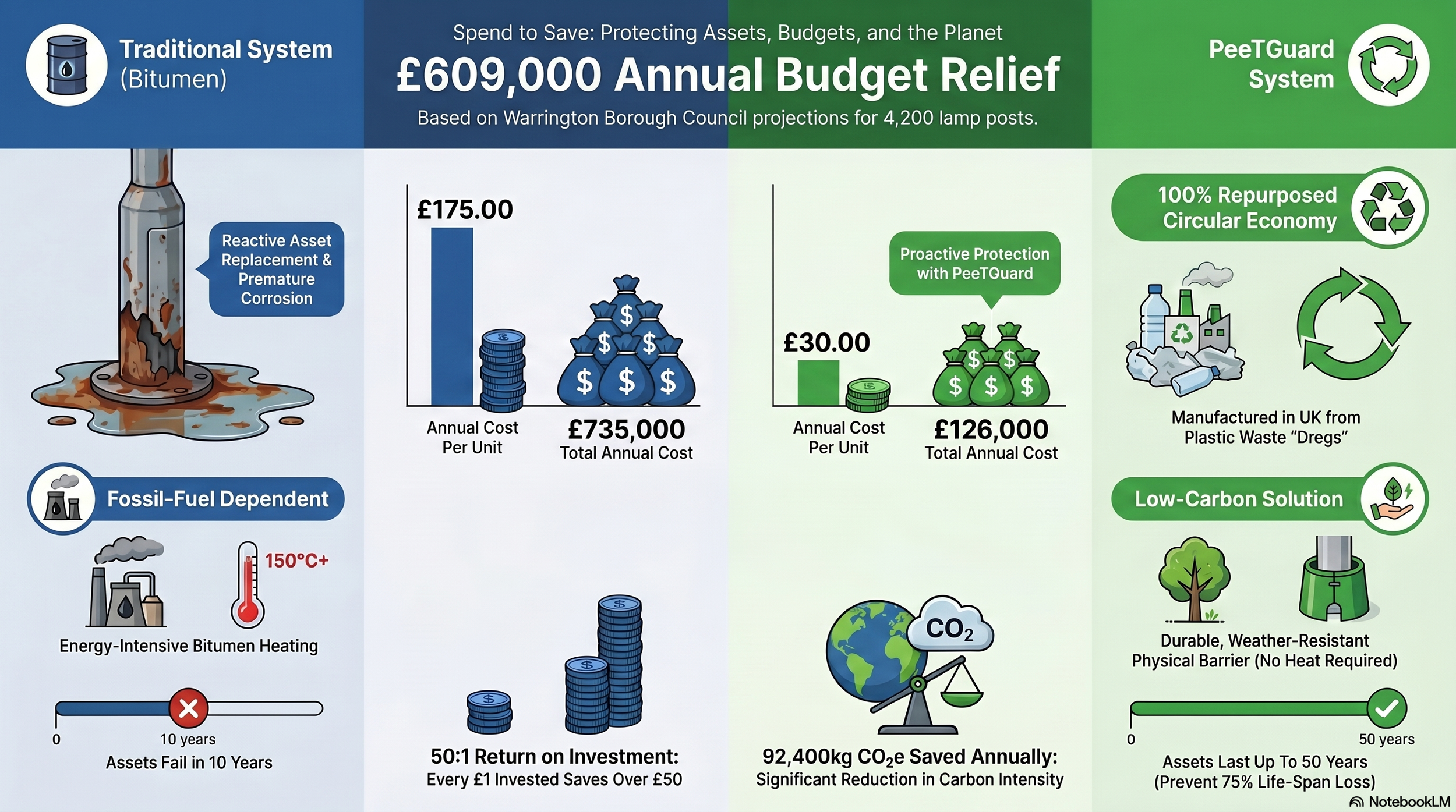
Warrington Borough Council: Infrastructure Asset Cost Comparison Infographic
